Project Details
Project Overview
Industry: Surface Coating & Spraying
Airflow: 10,000 NCMH
Pollutants: Volatile Organic Compounds (VOCs)
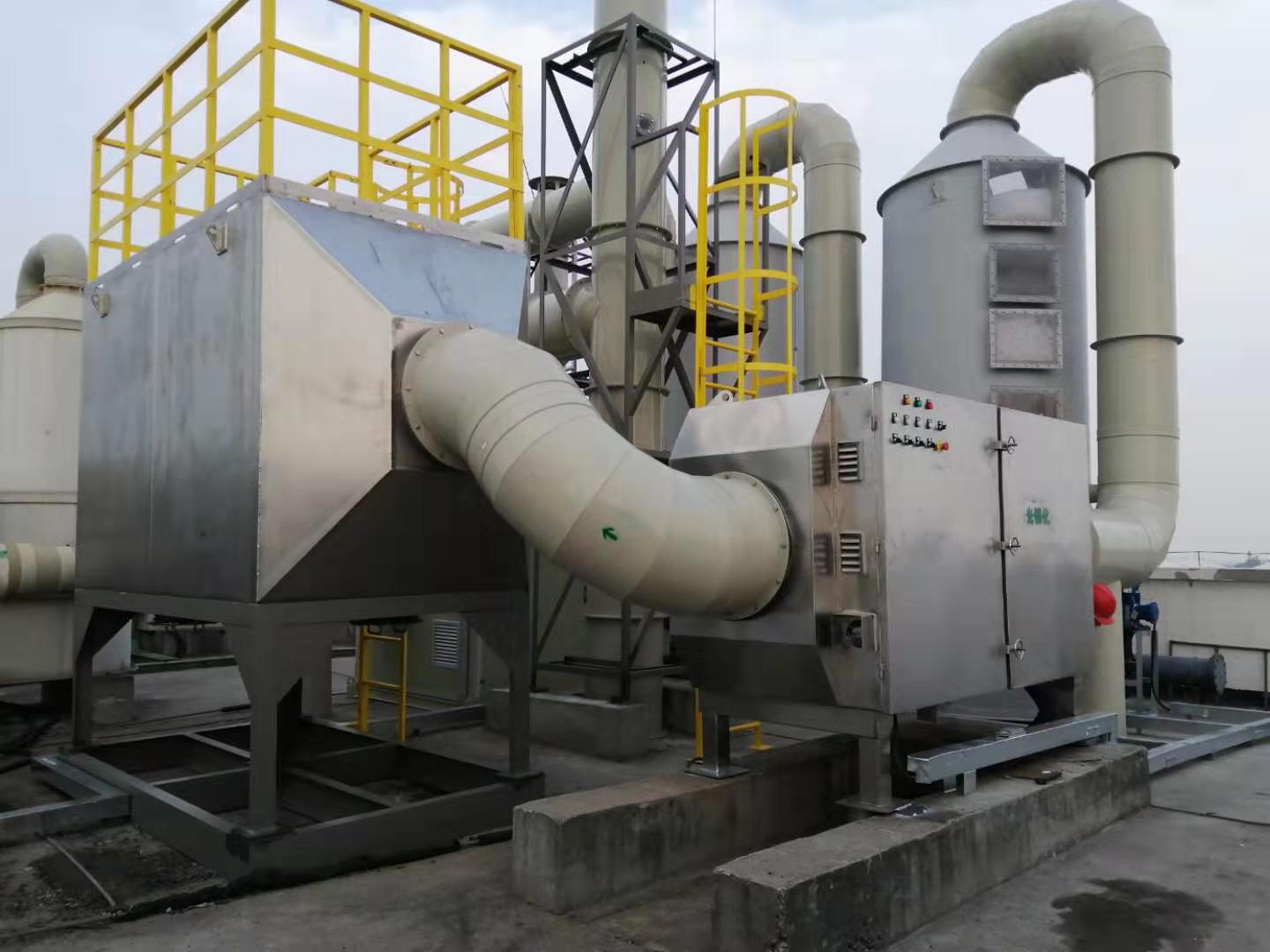
System: Wet Scrubber + Photocatalytic Oxidation + Activated Carbon Adsorption
Project Photos
Application Overview
This project was developed for VOC emission control in industrial spraying operations.
The treatment system is designed to manage volatile organic compounds (VOCs) generated during paint spraying and coating processes. Typical emissions may include solvent vapors and organic compounds released during surface finishing operations.
System Configuration
The system combines a wet scrubber, a photocatalytic oxidation unit and an activated carbon adsorption unit to provide multi-stage VOC treatment.
The wet scrubber removes particulate contaminants and water-soluble compounds from the exhaust stream. Photocatalytic oxidation helps break down organic pollutants, while the activated carbon adsorption unit serves as the final polishing stage for residual VOC removal.
Project Photos
Discuss a Similar Project
Share your process conditions, airflow, pollutants and site constraints with AuSSE to evaluate a suitable treatment system.
Contact our engineering team