
Project Overview
Industry: Flavor & Fragrance Manufacturing
Airflow Capacity: 30,000 NCMH
Pollutants: Toluene, Ethyl acetate, n-Heptane, Dichloromethane
Treatment System: Emergency Activated Carbon System + Alkali Scrubber + Dehumidification & Filtration + RTO (Regenerative Thermal Oxidizer) + Quenching Tower + Secondary Alkali Scrubber
Application Overview
This project was developed for VOC emission control in flavor and fragrance manufacturing processes.
The system is designed to treat complex solvent-based VOC emissions generated during fragrance blending, raw material processing, and chemical formulation operations. These emissions typically contain aromatic hydrocarbons and chlorinated organic compounds requiring multi-stage treatment.
System Configuration
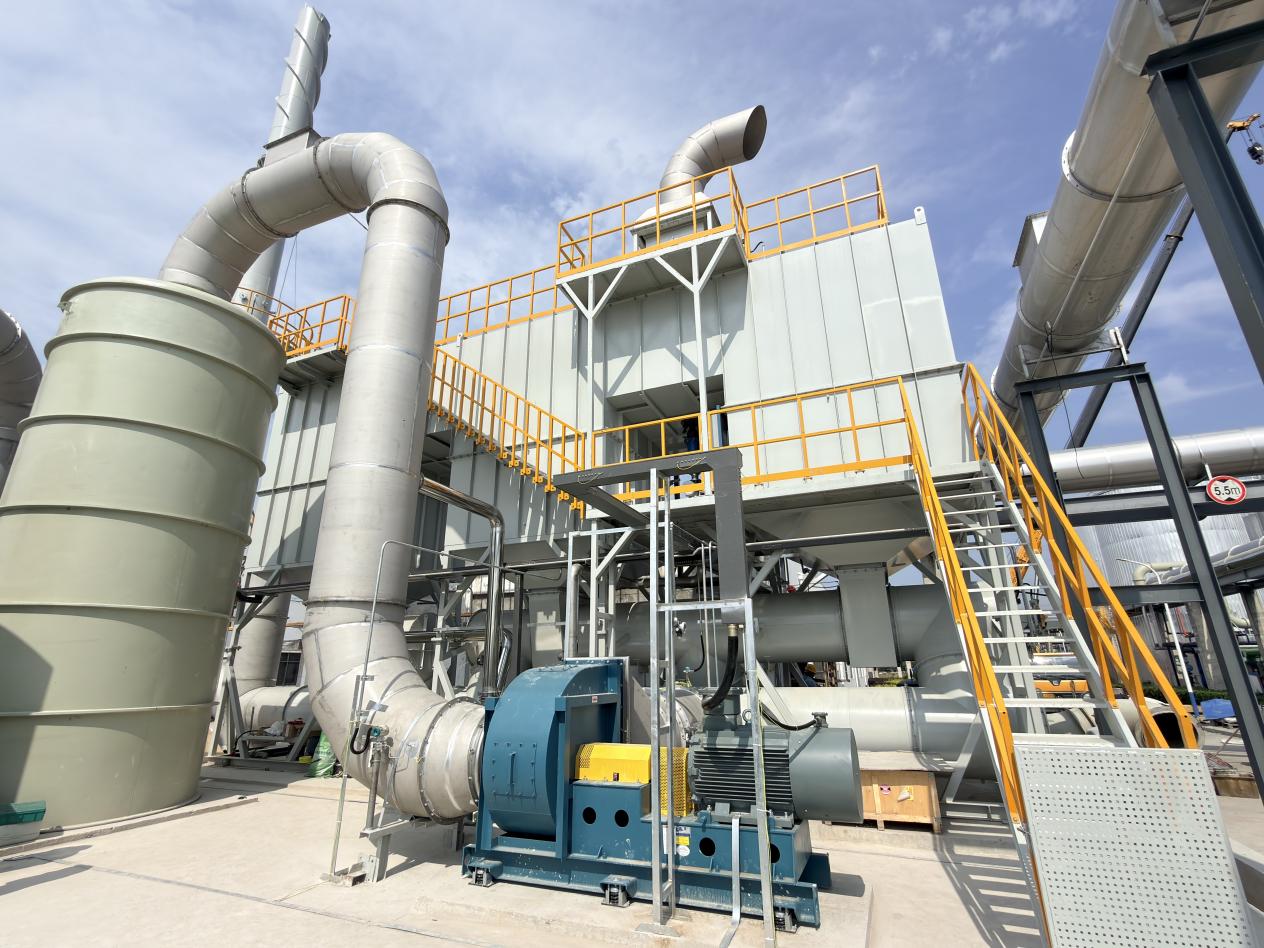
The treatment system adopts a multi-stage VOC abatement process combining adsorption, chemical scrubbing, thermal oxidation, and gas cooling.
Exhaust gas is first treated through an emergency activated carbon system and alkali scrubber for initial VOC reduction. The gas then passes through a dehumidification and filtration unit before entering the RTO system for high-temperature thermal oxidation.
After oxidation, the flue gas is cooled in a quenching tower and further treated in a secondary alkali scrubber to ensure stable emission compliance.
Project Photos
Discuss a Similar Project
Share your process conditions, airflow, pollutants and site constraints with AuSSE to evaluate a suitable treatment system.
Contact our engineering team